
Look, I'm gonna be straight with you here. After 15 years of living in Hurghada and watching European tourists — bless them — walk away with "genuine papyrus" that's actually banana leaf, or "real silver" that turns green in the bath... I had to write this.
Egypt's traditional crafts are genuinely incredible. Like, properly world-class stuff that's been perfected over thousands of years. The problem? There's so much tourist tat mixed in with the real deal that it's nearly impossible to tell what's authentic unless you know what you're looking for.
So here's the thing — this isn't your typical "buy souvenirs in Egypt" article. This is me, Salem, a local guide who's been here since 2009, telling you exactly what to look for, what to avoid, and (crucially) what you should actually pay. No fluff. No marketing speak. Just the honest truth.
💡 Quick Reality Check
About 70-80% of "Egyptian crafts" sold in tourist areas are mass-produced in China or made from cheap materials. But don't let that put you off — the real stuff exists, you just need to know where to find it. That's what this guide is for.
✋ Henna Art & Body Painting
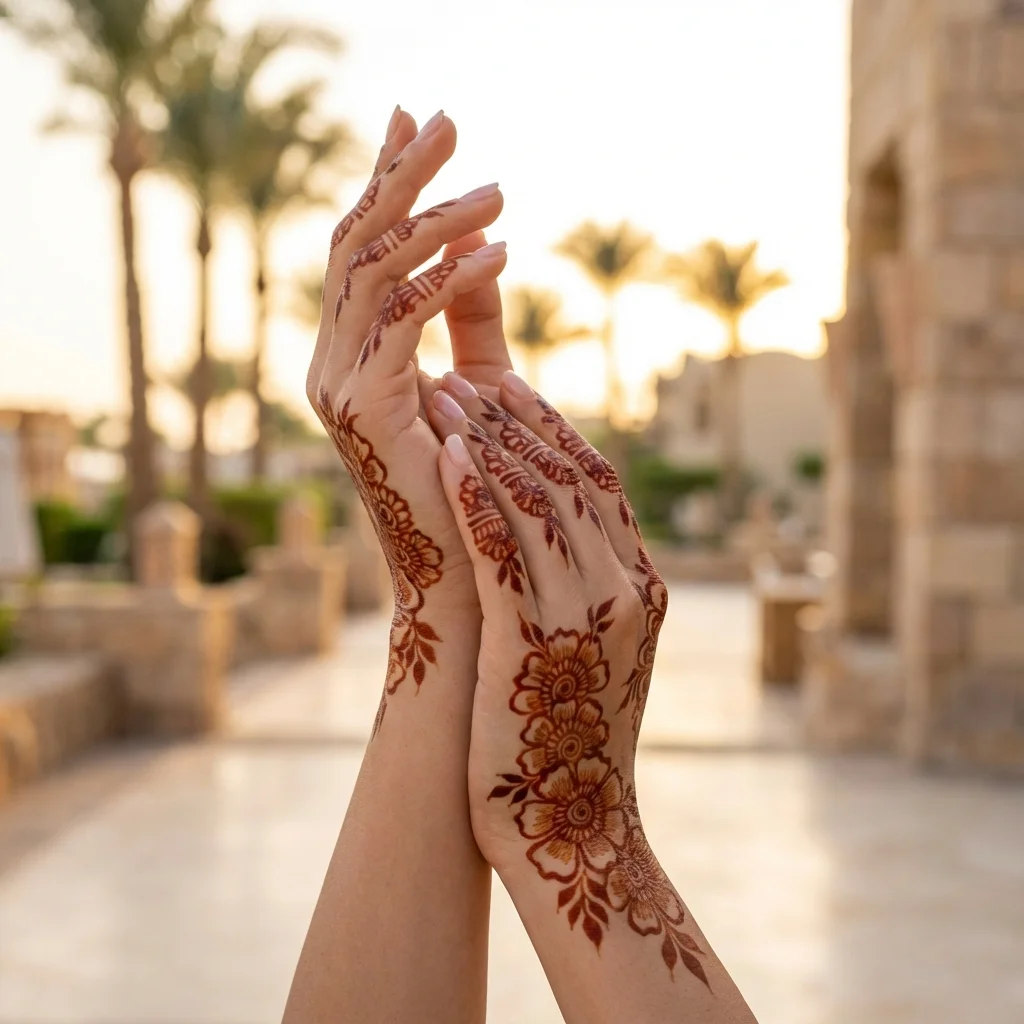
Right, so henna... probably the most common thing tourists ask me about. And honestly? It's one area where you really, REALLY need to be careful. Not because of scams — though those exist — but because of your actual health.
What Is Traditional Henna?
Real henna — and I mean the proper stuff — is made from the leaves of the Lawsonia inermis plant. Been used in Egypt, Sudan, and across the Middle East for literally thousands of years. The Pharaohs used it. Cleopatra allegedly used it. It's old-school cool, basically.
When it's done right, henna leaves a reddish-brown stain that lasts about 2-3 weeks. Smells kinda earthy, slightly sweet. The paste itself should be dark brownish-green. That's the real deal.
The Black Henna Problem (Please Read This)
Okay, this is where I get a bit... intense. Bear with me.
"Black henna" — the stuff that gives you instant dark black designs — is NOT real henna. It's mixed with a chemical called PPD (para-phenylenediamine), which is the same crap they put in hair dye. And here's the thing: when you put concentrated PPD directly on your skin...
⚠️ Serious Warning About Black Henna
Black henna can cause severe allergic reactions, chemical burns, permanent scarring, and can even sensitize you to hair dye for life. I've seen tourists with burns that took months to heal. Some ended up in hospital. It's no joke, mate. NO. JOKE.
If someone offers you henna and says "instant black colour" or shows you a tube of black paste — walk away. Doesn't matter how pretty the design is. Just don't.
How to Spot Real vs Fake
- Real henna paste: Dark greenish-brown, smells earthy, takes 4-6 hours to develop colour
- Fake "black henna": Jet black paste, chemical smell, instant colour (RUN AWAY)
- Real henna result: Reddish-brown stain, darker on palms, lighter elsewhere
- Fake result: Black marks, itching, burning sensation (get medical help ASAP)
Types of Henna Designs
Arabic Style
Large, flowing floral patterns with lots of empty space. Think big flowers, leaves, vines. Very popular in Egypt and the Gulf. Looks gorgeous, doesn't take too long to do.
Indian Style
Incredibly intricate, covering most of the hand and forearm with tiny detailed patterns. Takes hours to apply. Beautiful but honestly... maybe don't choose this if you're getting it done on a beach in 40-degree heat.
Nubian Style
Geometric patterns, bold lines, African influence. Really striking. You'll see this more in Aswan than Hurghada, but some artists here can do it if you ask.
Where to Get Safe Henna Done
Honestly? The best option is asking your hotel spa. Most decent hotels have henna artists who use proper natural paste because — shocker — they don't want to be sued when tourists have reactions.
If you're in Old Hurghada or the souqs, look for artists who:
- Mix the paste fresh in front of you (or show you the powder)
- Don't promise "instant black" results
- Are willing to do a small test patch first
- Have photos of healed designs (not fresh ones — healed ones)
| Design Type | Fair Price (Real Henna) | Scam Price (Don't Pay) |
|---|---|---|
| Small palm design | 150-250 EGP (~€3-5) | 500+ EGP |
| Full hand (one side) | 300-500 EGP (~€6-10) | 1000+ EGP |
| Bridal/elaborate design | 800-1,500 EGP (~€15-28) | 3,000+ EGP |
🏺 Coloured Sand Bottles
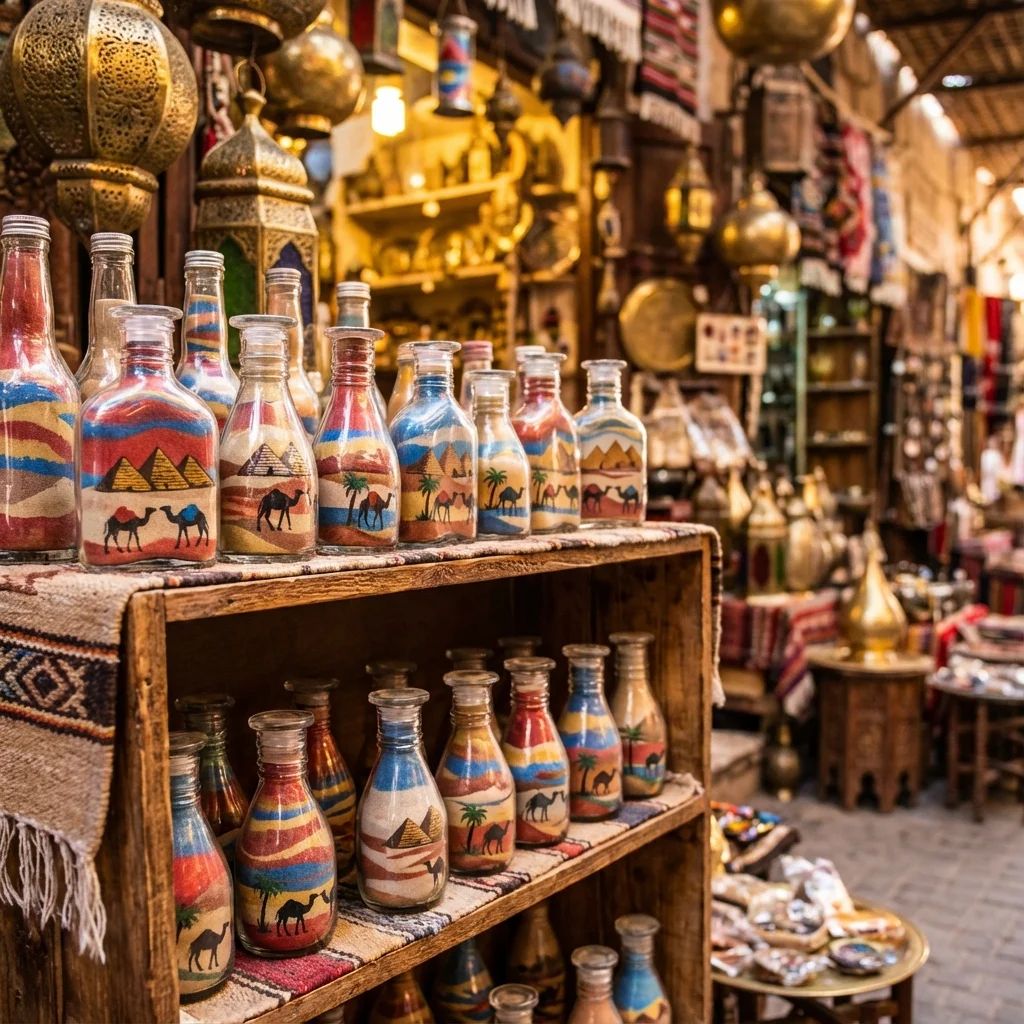
These. Are. EVERYWHERE.
You literally cannot walk through any market in Hurghada without seeing those glass bottles filled with layers of coloured sand — usually showing camels, pyramids, palm trees, or someone's name spelled out. And you know what? The good ones are actually pretty cool. Art form that supposedly started in Jordan but the Egyptians have absolutely made it their own.
How They're Actually Made
So the sand isn't naturally coloured (obviously). Artists take regular white or light sand, grind it to different grades, then dye it with fabric dyes. Different colours, different textures. They fill these glass containers — bottles, jars, those cone-shaped thingies — using thin metal tools to create intricate layered designs.
A skilled artist can create surprisingly detailed images. Camels with actual proportions. Desert sunsets with gradients. Even portraits, if you find someone really talented. The not-so-skilled... well, you get blobby camels and sand that looks like it came from a toddler's art project.
Quality Indicators
Here's how to spot the good stuff:
- Sharp lines: Colours should have defined edges, not muddy mixing
- Firm packing: Sand shouldn't shift when you turn the bottle
- Sealed properly: Cork or lid should be secure, often with wax seal
- Glass quality: Clear, no bubbles, smooth surface
- Detail work: Animals should look like animals, not coloured blobs
✅ Transportation Tip
These things do not like being in checked luggage. Like, at ALL. Wrap them in clothes, put them in your carry-on, and accept that there's still a 20% chance they'll crack. Some artists will add extra glue to seal everything before your flight — ask them.
Fair Prices for Sand Art
| Size | Fair Price | Tourist Trap Price |
|---|---|---|
| Small bottle (10cm) | 50-100 EGP (~€1-2) | 300+ EGP |
| Medium bottle (15-20cm) | 150-250 EGP (~€3-5) | 500+ EGP |
| Large bottle with detailed scene | 300-600 EGP (~€6-11) | 1,500+ EGP |
| Custom name/message | +100-200 EGP extra | +500 EGP |
Fun fact: some artists can make these bottles in like 10 minutes. That's not a bad thing — it shows skill. But if they're rushing through it and you're paying "premium handcraft" prices... yeah, maybe negotiate harder.
🧵 Embroidery & Traditional Weaving
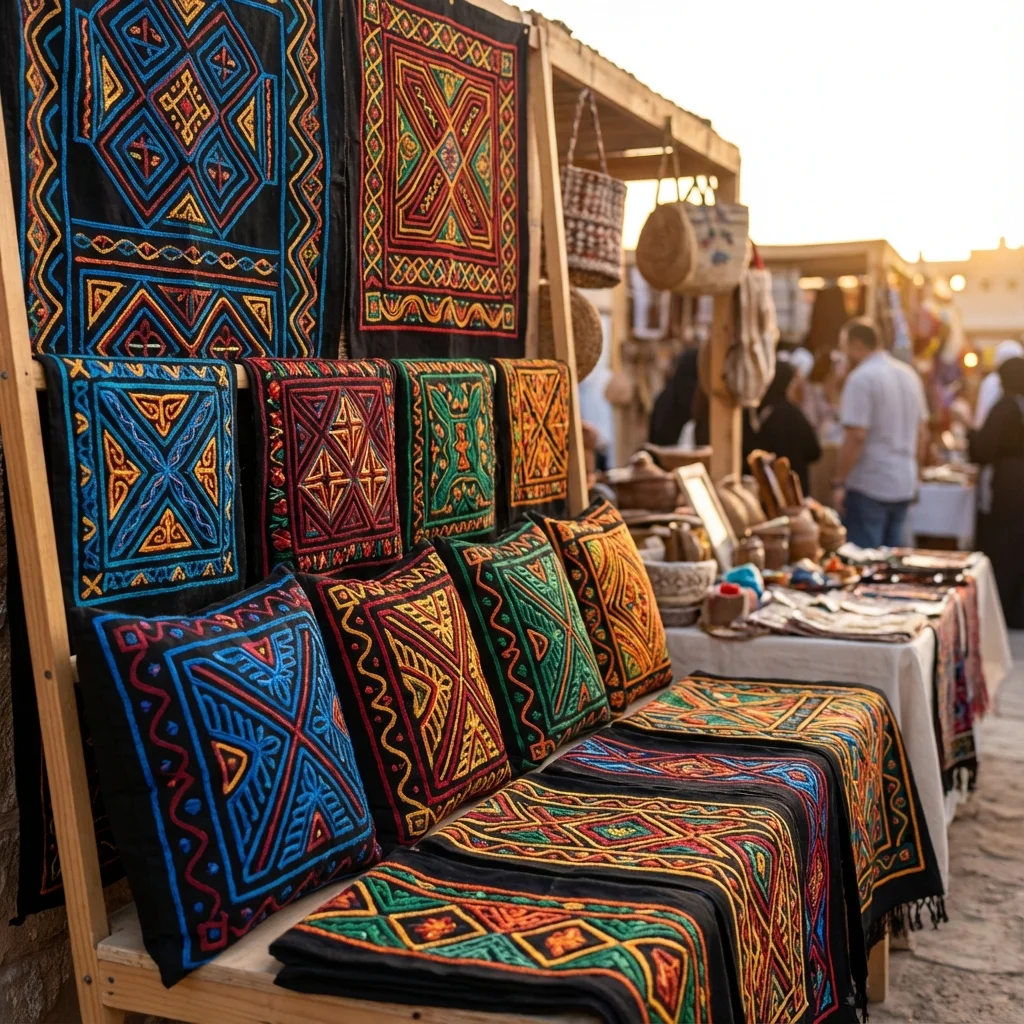
Now THIS is where Egypt really shines. The textile traditions here — particularly from Nubia (Aswan region), Sinai, and Upper Egypt — are genuinely world-class. We're talking centuries-old patterns passed down through generations of women who probably learned from their grandmothers who learned from their grandmothers... you get the idea.
Nubian Embroidery
If you only buy one textile thing in Egypt, make it something Nubian. I'm biased — I have Nubian friends and their craft is insane — but seriously. The geometric patterns are distinctive: bold colours (orange, yellow, green, red, blue against black or white backgrounds), angular designs, symbols with actual meaning.
Common items you'll find:
- Tablecloths and runners — gorgeous, functional, conversation starters at dinner parties
- Cushion covers — those geometric patterns look amazing on neutral sofas
- Wall hangings — some tell stories, some are just pure decoration
- Bags and pouches — actually useful AND beautiful
Bedouin Weaving
The Bedouin tribes — particularly in Sinai but also in the Eastern Desert near Hurghada — have their own textile traditions. Rougher, more utilitarian than Nubian work, but with its own beauty. Think thick wool rugs, woven bags, camel decorations.
A lot of what you see in Hurghada claiming to be "Bedouin" is actually factory-made in Cairo or... elsewhere. Real Bedouin textiles have:
- Slightly uneven weaving (handmade means imperfect)
- Natural fibres (wool, sometimes cotton or goat hair)
- Natural or vegetable dyes (colours are less "bright")
- Weight to them — not flimsy factory stuff
Upper Egyptian Tally
Tally (or telli) is this amazing handmade lace-like fabric from the Asyut and Sohag regions. Silver or gold metallic thread woven into a fine mesh to create incredible patterns. Used for shawls, dresses, scarves. Proper tally takes weeks to make.
Fair warning: real tally is expensive. Like, 2,000-5,000 EGP (€40-100) for a quality shawl. If someone's selling "talli" for 200 EGP, it's machine-made. Not necessarily bad — but not the real thing.
| Item | Fair Price | Notes |
|---|---|---|
| Nubian cushion cover | 200-500 EGP (~€4-10) | Depends heavily on detail |
| Embroidered tablecloth | 500-1,500 EGP (~€10-28) | Size matters obviously |
| Bedouin woven bag | 150-400 EGP (~€3-8) | Real ones have weight to them |
| Tally shawl (genuine) | 2,000-5,000 EGP (~€40-100) | Worth it for special occasions |
💃 Belly Dance Costumes & Accessories
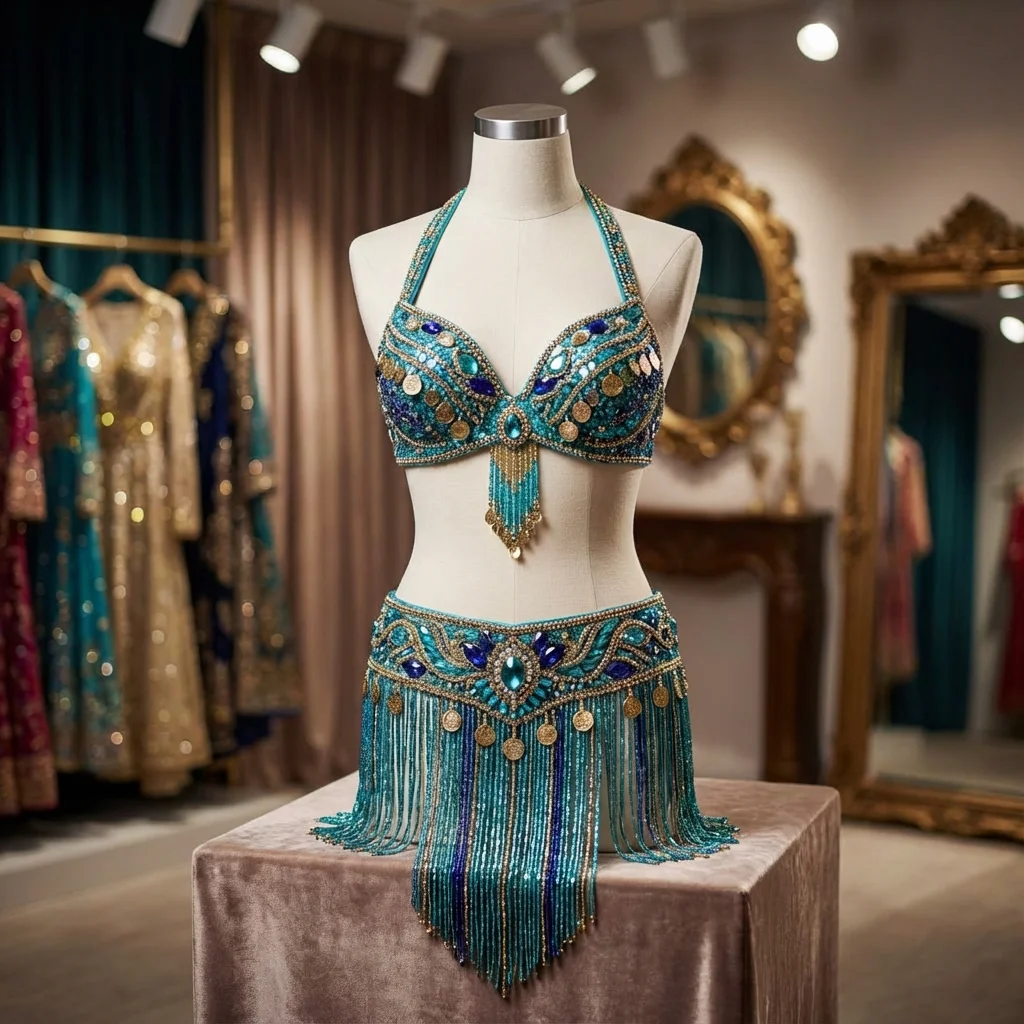
Okay so... I feel like I need to address this. Every week, without fail, at least one European lady asks me about buying belly dance costumes. And honestly? Why not. Egypt is literally the home of oriental dance. If you're going to buy this stuff anywhere, might as well be here.
The Different Types of Costumes
Bedlah (Classic Two-Piece)
The iconic look — embellished bra top, low-slung belt or skirt with a slit. Covered in sequins, beads, crystals, fringe. The professional-grade ones are genuinely works of art. Like, hand-sewn with thousands of individual components. We're talking 40+ hours of work for a good one.
Baladi Dress
More traditional, less flashy. Full-length fitted dress, usually in solid colours with mesh panels and some embellishment around the bust. Egyptians often prefer this style — it's considered more modest but still shows off the dance movements.
Saidi Dress
For folkloric "stick dancing" from Upper Egypt. Long, loose fitting, belted at the waist. Often comes with a matching headscarf. Usually in bright colours — pink, turquoise, yellow.
Quality Levels (Real Talk)
There's basically three tiers here:
- Tourist souvenirs (cheap): Machine-made in China, thin fabric, plastic beads/sequins. Fine for costume parties, not for actual dancing. 200-500 EGP.
- Mid-range student costumes: Locally made, decent quality, will hold up to actual dancing. Good for lessons or casual performances. 1,000-3,000 EGP.
- Professional grade: Egyptian designer pieces, hand-sewn, quality crystals (Swarovski or similar), custom fitted. What actual performers wear. 5,000-15,000+ EGP.
Hip Scarves & Belts
If you just want something fun (and way more packable), hip scarves are the way to go. The tourist ones with coins are 50-150 EGP and honestly fine for what they are. Nice jangly sound, fun at parties, whatever.
Professional-quality beaded hip belts — the heavy ones that go "thud" instead of "jingle" — run 500-2,000 EGP. Worth it if you actually dance.
🎭 Where to Find the Good Stuff
For serious costumes, Cairo is honestly better than Hurghada. The Khan el-Khalili area has dedicated costume shops. In Hurghada, the Senzo Mall area has a few specialty stores, but selection is limited. Ask at dance studios — teachers always know the best suppliers.
Accessories Worth Buying
- Finger cymbals (sagat/zills): 100-300 EGP for decent ones
- Isis wings: 300-800 EGP, cool for photos even if you don't dance
- Veils: 150-500 EGP for silk, cheaper for polyester
- Headpieces/hair ornaments: 100-400 EGP
- Arm cuffs: 150-400 EGP per pair
📜 Papyrus Paintings
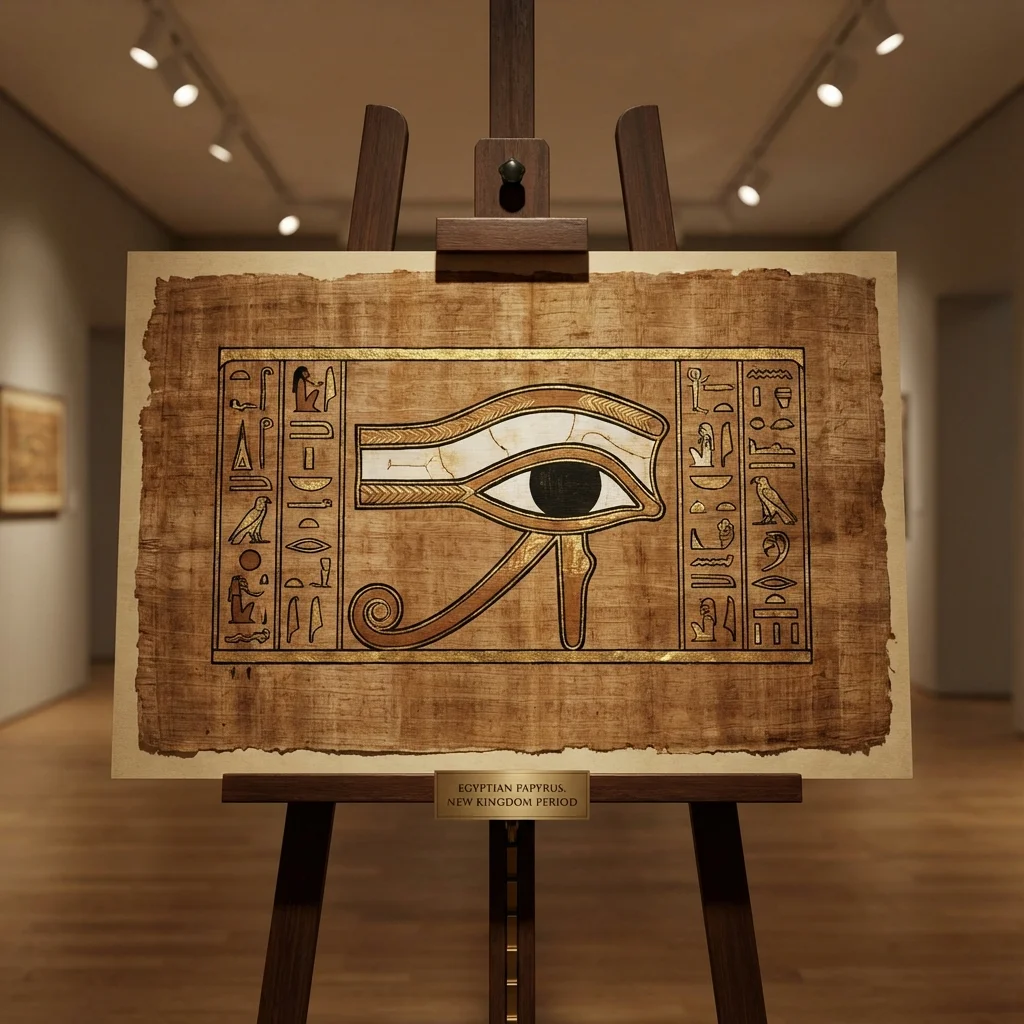
Ooooh boy. Here we go. This is probably the single biggest scam in Egyptian tourism and I'm about to go OFF about it.
So here's the deal: real papyrus is made from the papyrus plant (Cyprus papyrus), grown in the Nile Delta, hand-processed using techniques that are literally 5,000 years old. It's labour-intensive, expensive, and produces a distinctive material that you can roll, fold, and even get wet without destroying.
What 90% of tourists buy? Banana leaf. Banana. Leaf. Pressed, dried, painted with factory-produced images, sold as "authentic Egyptian papyrus" for 50% the price of lunch.
How to Tell Real from Fake (THE MOST IMPORTANT SECTION)
🔍 The Definitive Real vs Fake Test
Ask to roll the papyrus TIGHT. Real papyrus can be rolled, folded, even crumpled without cracking. Banana leaf will crack, crease, and show white stress marks immediately. This test is foolproof. DEMAND to try it.
Other indicators:
- Real papyrus: Visible horizontal and vertical fibres when held to light (cross-hatched pattern)
- Fake: Uniform texture, no visible fibre pattern
- Real: Natural brownish colour with slight variations
- Fake: Too perfect, too uniform in colour
- Real: Slightly rough texture, natural feel
- Fake: Smooth, almost papery or plasticky
Where to Actually Buy Real Papyrus
The ONLY guaranteed way to get real papyrus is at an actual papyrus factory/workshop. Cairo has several near the pyramids. In Hurghada... honestly, most souvenir shops are selling fake. Your best bet is:
- Book a day trip to Luxor — legitimate papyrus shops there
- Ask your hotel for recommendations (good hotels know the real dealers)
- Look for workshops where they SHOW you the production process
Common Paintings & Their Meanings
Eye of Horus (Wadjet)
Protection, health, restoration. Probably the most common symbol. Still cool if done well.
Ankh
Key of life. Literally "life" in hieroglyphics. Very popular, very symbolic.
Tutankhamun's Death Mask
The famous golden mask. Recognizable, impressive when painted well.
Book of the Dead Scenes
Afterlife journey images. Complex, beautiful, takes skill to reproduce properly.
Hieroglyphic Name Cartouches
Your name written in hieroglyphics inside an oval "cartouche" (royal name border). Fun personalized option.
| Item | Real Papyrus Price | Banana Leaf Price (AVOID) |
|---|---|---|
| Small painting (A5 size) | 200-400 EGP (~€4-8) | 50-100 EGP |
| Medium painting (A4 size) | 400-800 EGP (~€8-15) | 100-200 EGP |
| Large painting (A3+ size) | 800-2,000 EGP (~€15-40) | 200-400 EGP |
| Hand-painted quality artwork | 2,000-10,000+ EGP | N/A (they don't make quality fakes) |
🗿 Stone Carving & Alabaster
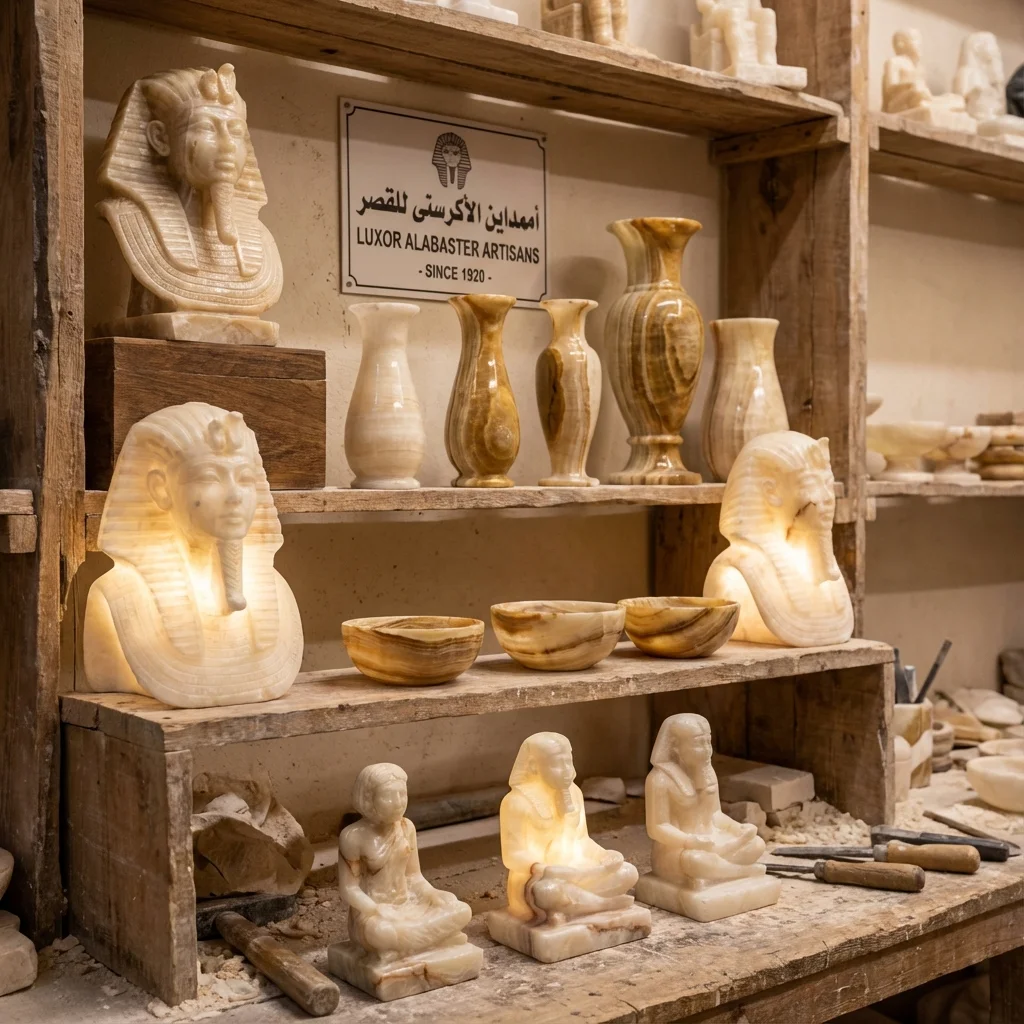
Egypt has been carving stone for... well, you've seen the pyramids, right? And the Sphinx? This tradition is very much alive, centered mainly in Luxor but with products sold everywhere including Hurghada.
Alabaster: The Famous Egyptian Stone
Egyptian alabaster (calcite alabaster, technically) is this gorgeous translucent stone that glows when you put a light behind it. The workshops in Luxor — particularly around the Valley of the Kings — have been working this material for generations.
Common items: vases, bowls, figurines, chess sets, candle holders, lamps (the translucent ones are stunning when lit).
How to Spot Real Alabaster
- Weight: Real alabaster is surprisingly heavy for its size
- Temperature: Stays cool to the touch, even in hot weather
- Translucency: Shine a phone flashlight behind thin areas — should glow
- Imperfections: Natural veining, slight colour variations (marble-like)
The fake stuff is usually resin or plaster, sometimes painted to look like alabaster. It's lighter, warmer to touch, and doesn't have the natural translucency.
Basalt & Granite Replicas
Black basalt and red/grey granite are used for replica ancient statues. The proper ones are hand-carved and can be quite impressive. The cheap ones are... molded cement painted black. You'll know the difference by the weight and texture.
Watch Out For...
⚠️ The Alabaster Factory Scam
Some "alabaster factories" are actually high-pressure sales operations. They show you a quick demonstration, give you tea, then won't let you leave easily without buying. Always know your exit strategy, and don't feel bad walking out. They WILL survive.
| Item | Fair Price |
|---|---|
| Small alabaster figurine (10cm) | 200-400 EGP (~€4-8) |
| Medium alabaster vase | 400-1,000 EGP (~€8-20) |
| Alabaster lamp (with fitting) | 1,000-3,000 EGP (~€20-60) |
| Basalt statue replica (medium) | 500-1,500 EGP (~€10-30) |
⚱️ Copper, Brass, Silver & Aluminium Work
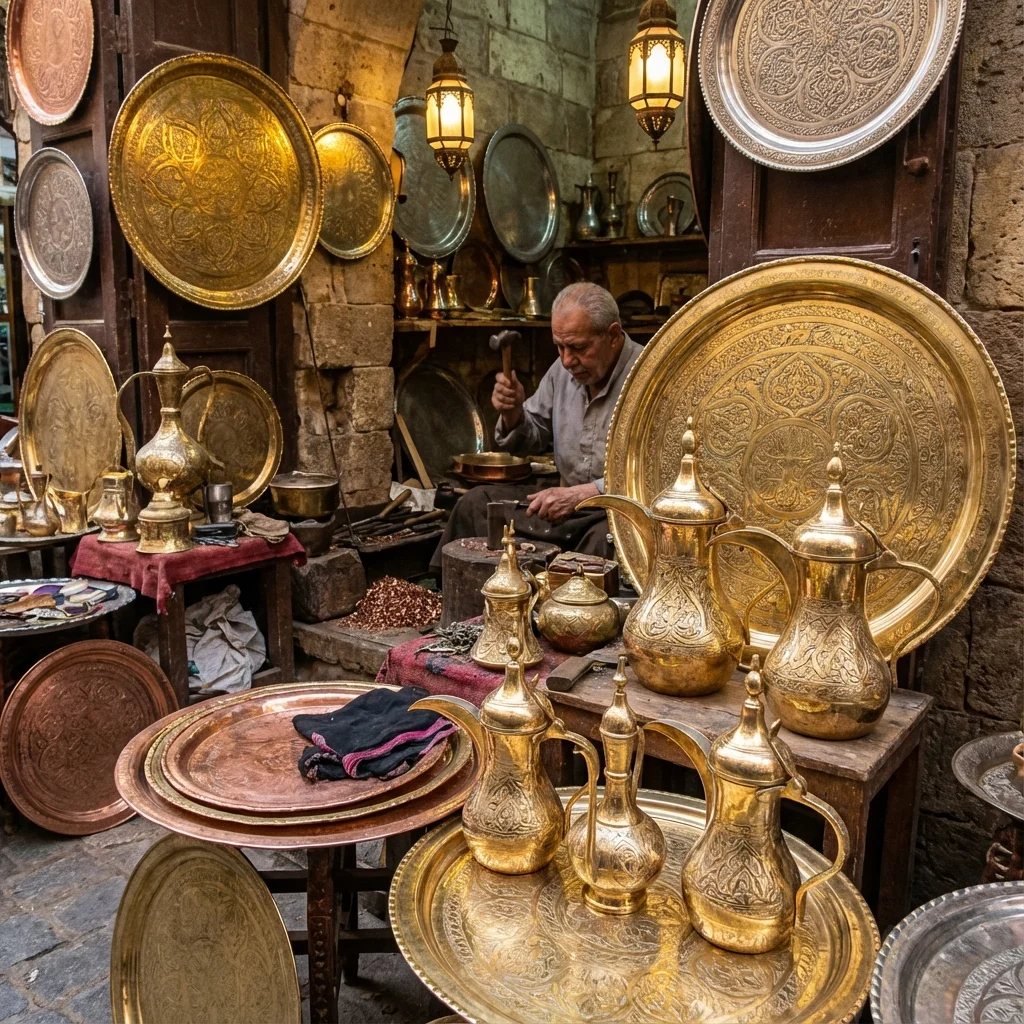
The sound of hammering on metal is basically the soundtrack of Egyptian bazaars. Metalworking here goes back to the Pharonic era (literally, they found copper tools in pyramids), and the tradition continues in workshops across the country.
Copper & Brass
The most common and honestly most impressive metalwork you'll see. Trays, plates, coffee pots (dallah), lanterns, decorative items — all hand-hammered with intricate patterns.
How to tell quality:
- Hand-hammered pieces have slight irregularities — that's a good thing
- Engraving should be sharp and detailed, not shallow and blurry
- Weight matters — heavier generally means more metal, better quality
- Lacquered pieces won't develop patina but stay shiny longer
Silver Work
Egypt has some beautiful silver jewellery and decorative items. BUT — and this is important — a LOT of what's sold as "silver" is actually silver-plated or nickel. Real silver should be stamped with a purity mark (usually 800 or 925).
✅ Silver Test
Real silver is non-magnetic. Bring a small magnet shopping — if the "silver" sticks to it, it's not silver. Also, silver has a distinctive slightly warm smell when rubbed. Hard to describe but once you know it, you know it.
Arabesque Patterns (Mashrabiya Style)
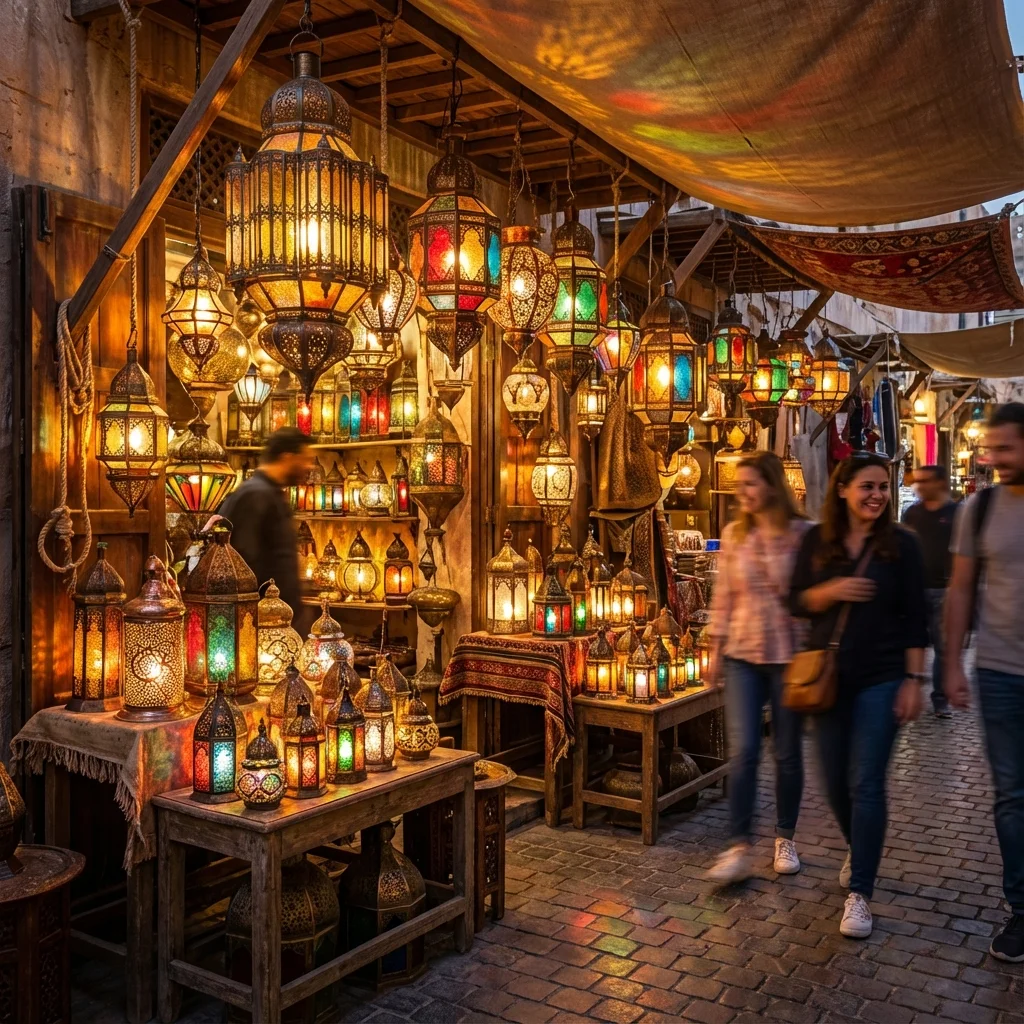
That intricate geometric metalwork you see on lanterns, screens, and decorative pieces? It's called arabesque or mashrabiya (when it's wood). The metal version is often brass or copper, laser-cut nowadays for the cheap stuff but still hand-cut in traditional workshops.
Lanterns (fawanees) are probably the most popular item. Proper handmade ones with coloured glass inserts are stunning and make incredible ambient lighting. Cheap ones are... well, they look cheap.
| Item | Fair Price |
|---|---|
| Small copper tray (20cm) | 150-300 EGP (~€3-6) |
| Brass dallah (coffee pot) | 300-800 EGP (~€6-15) |
| Decorative lantern (medium) | 400-1,200 EGP (~€8-24) |
| Large hammered copper plate | 500-1,500 EGP (~€10-30) |
| Silver bracelet (925 stamp) | 500-1,500 EGP (~€10-30) |
💍 Egyptian Jewelry
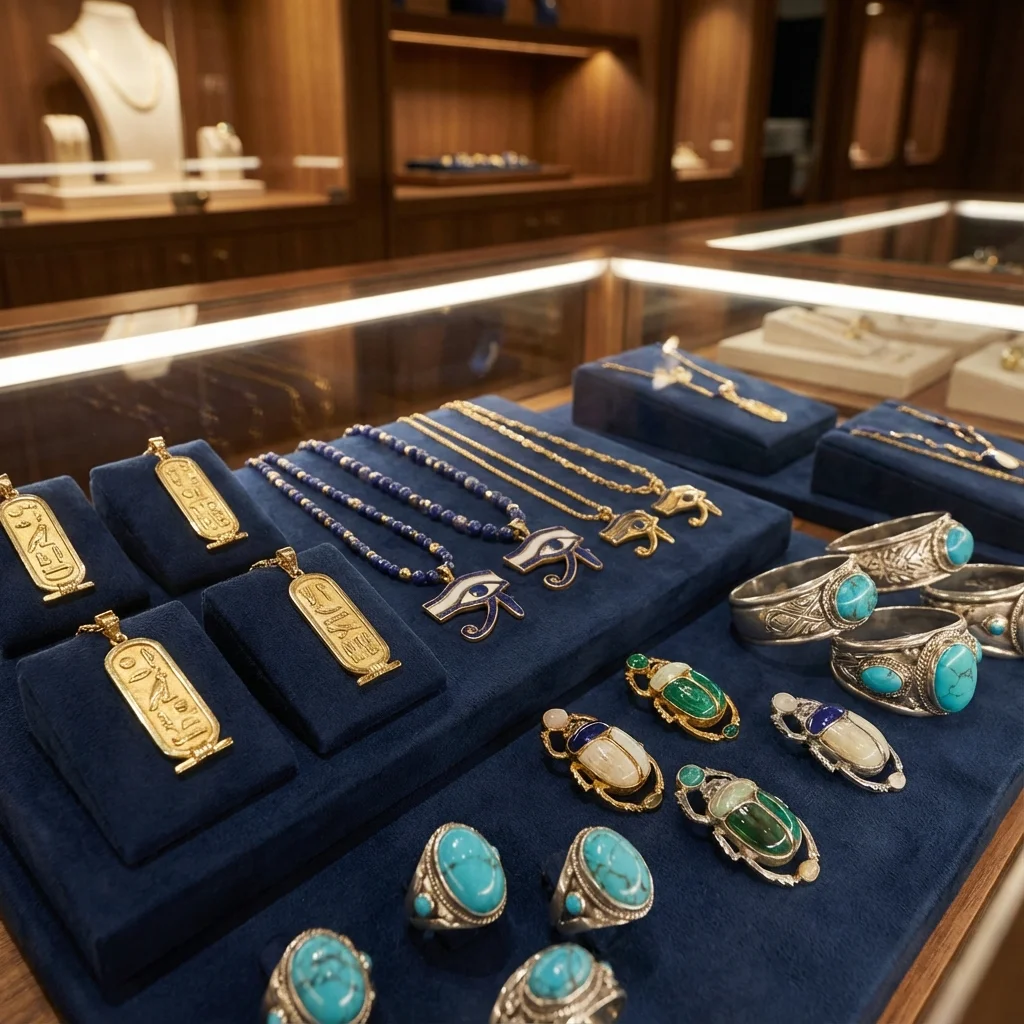
Right, so jewelry is a MASSIVE category here — everything from cheap tourist trinkets to museum-quality gold pieces that cost more than your flight. Let's break it down by type and price range.
Gold (The Real Deal)
Egypt loves gold. Like, LOVES it. The gold souk (market) is a thing of beauty — shop after shop of gleaming yellow metal. Egyptian gold is typically 18k or 21k (higher gold content than most Western jewelry).
Thing is, gold is sold by weight here, not by design. Current gold price plus a making charge (around 10-30% extra for the craftsmanship). You can look up the daily gold price online to check you're getting a fair deal.
Cartouche Jewelry
Your name in hieroglyphics inside an oval cartouche (the border that surrounds royal names). Available in gold, silver, or base metal with gold plating. VERY popular souvenir, and honestly pretty cool. A silver one runs maybe 300-600 EGP, gold anywhere from 2,000 to 10,000+ EGP depending on weight and karat.
Pharaonic Designs
Ankh pendants, Eye of Horus, scarab beetles, Nefertiti profiles, Isis wings... all the ancient Egyptian symbols made into jewelry. Quality varies wildly. The souvenir ones are fine for what they are; the artisan pieces are genuinely beautiful.
Bedouin Silver
Heavy, chunky, often set with coloured stones (turquoise, coral, carnelian). Traditional Bedouin designs. Really striking pieces that look amazing with flowing clothes. The authentic stuff comes from Sinai and desert regions.
⚠️ Gold Scam Warning
Some shops sell gold-plated items as solid gold. Always verify the stamp, ask for a certificate, and if possible, test the item. Reputable shops will have proper documentation. If the price seems too good for gold, it's not gold.
🔮 Glass & Pyrex Work
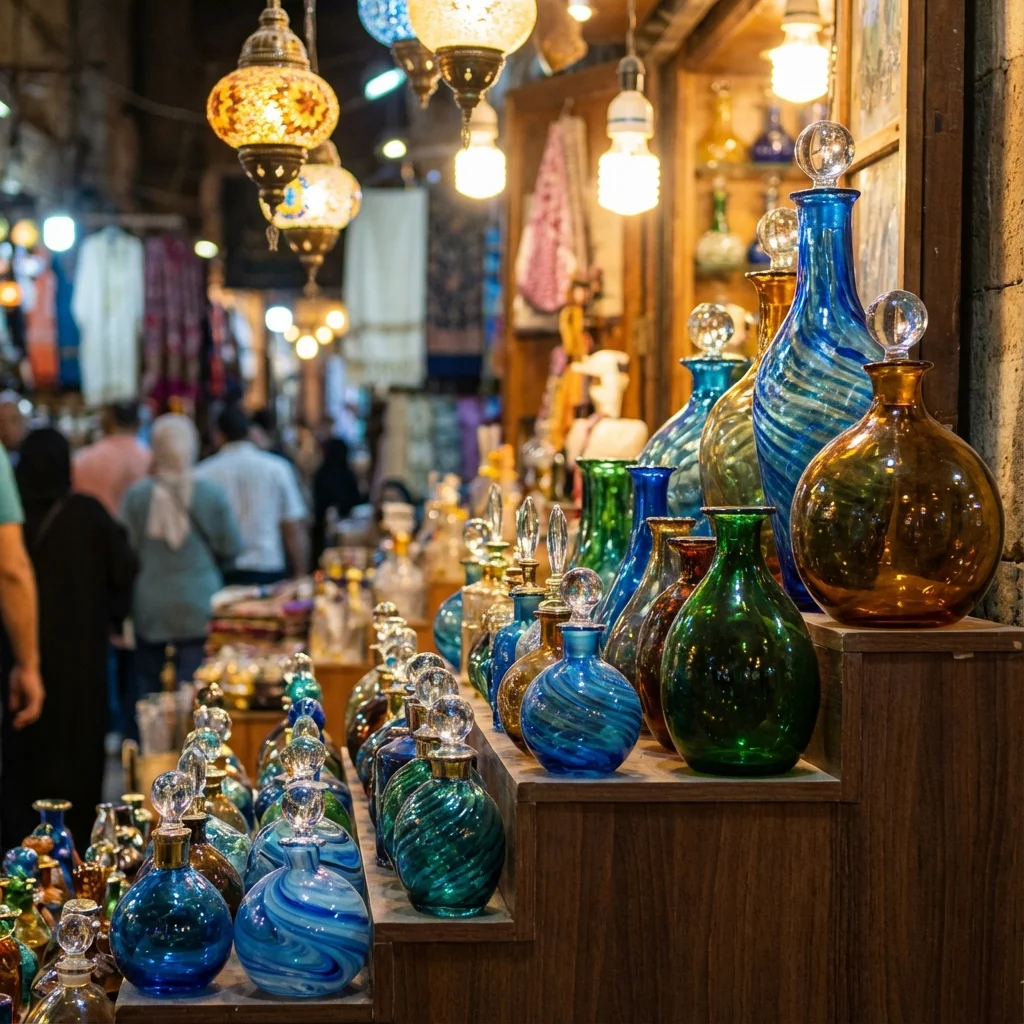
Egypt has a glass-blowing tradition dating back... honestly, I'm not sure how far, but it's old. Really old. The glass workshops are fascinating to watch — guys spinning molten glass on metal rods, shaping it with wooden tools, creating everything from perfume bottles to decorative pieces.
Khan el-Khalili Style Glass
The famous coloured glass from Cairo's bazaar — usually bright blues, greens, reds, and ambers. Used for lanterns, vases, drinking glasses, and those beautiful glass lamps that throw coloured light everywhere.
Muski Glass
Named after the Muski area of Cairo, this is usually darker, more amber-coloured glass with visible bubbles (intentional — it's a style, not a flaw). Very distinctive, quite beautiful in natural light.
Laboratory/Pyrex Style
Some workshops make decorative items using borosilicate (pyrex-style) glass — think those thin, delicate glass flowers, decorative pieces, etc. Pretty but fragile as hell. Pack VERY carefully.
| Item | Fair Price |
|---|---|
| Small perfume bottle | 50-150 EGP (~€1-3) |
| Coloured glass cup set (6) | 200-500 EGP (~€4-10) |
| Decorative glass lantern | 300-800 EGP (~€6-16) |
| Large vase or decorative piece | 500-1,500 EGP (~€10-30) |
🧣 Traditional Textiles & Clothing
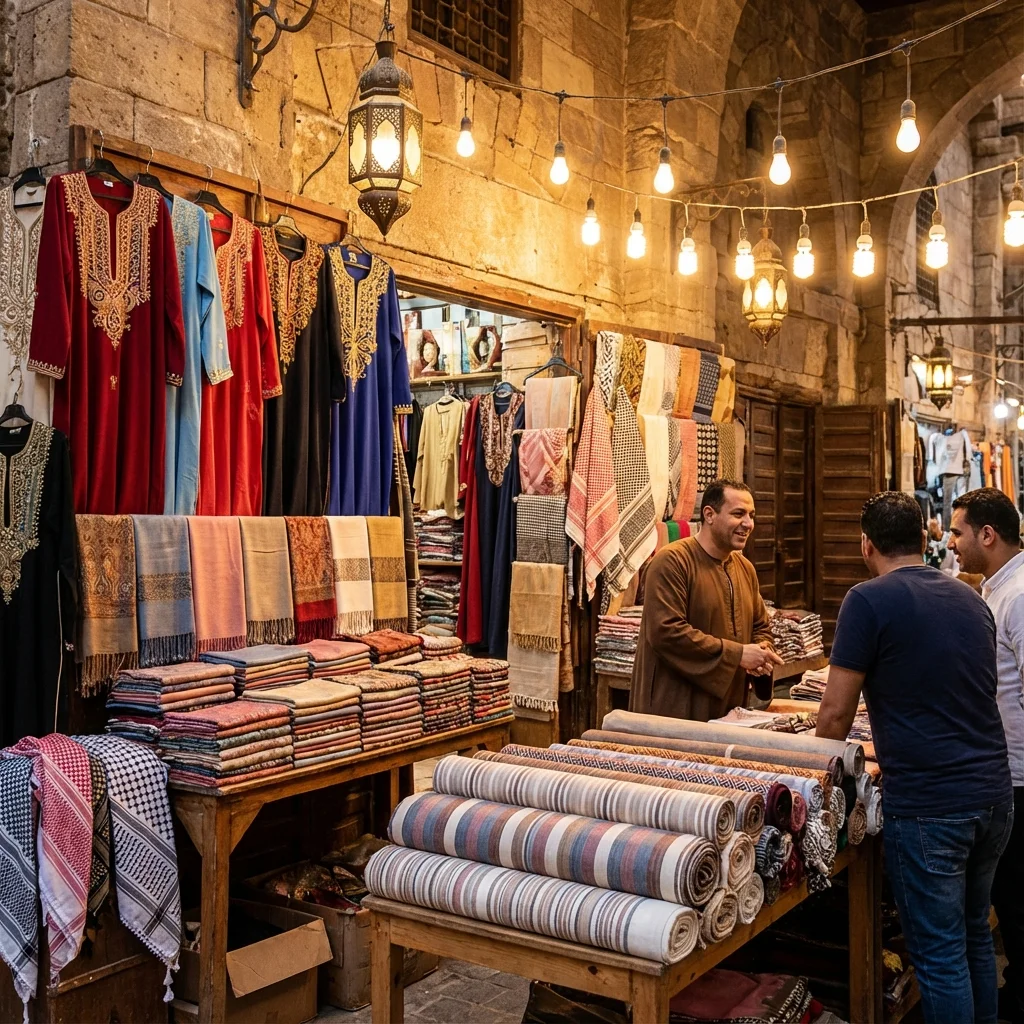
Gallabiya (Kaftan)
The traditional Egyptian robe worn by men (and women in simpler versions). Comfortable as hell, perfect for hot weather. Tourist versions are usually made to fit European bodies better than the local cut. Cotton ones are 200-500 EGP, fancier embroidered versions 500-1,500 EGP.
Pashmina/Scarves
Every shop sells these. Real pashmina is made from cashmere and is NOT cheap. What most shops sell is viscose or cotton — which is fine, just don't pay pashmina prices for cotton. Fair price for a nice cotton scarf: 100-250 EGP.
Keffiyeh (Head Scarf)
The traditional checked head scarf. Egyptian versions are usually red-and-white or black-and-white. Used for sun protection in the desert (legitimately useful!) or as a souvenir. 50-200 EGP for good quality cotton ones.
🛒 Where to Buy (Honest Assessment)
In Hurghada
Old Town (El Dahar)
The most "authentic" shopping experience in Hurghada. Small shops, some real craftspeople, definite need for bargaining. Quality varies wildly. Go in the evening when it's cooler and the atmosphere is better.
Senzo Mall Area
More fixed prices, more modern shopping experience. Less "adventure" but also less hassle. Good for people who hate bargaining (me, sometimes).
Marina Boulevard
Higher-end shops, higher prices, better quality generally. Nice for evening walks with shopping on the side. Expect to pay 20-30% more than El Dahar for similar items.
Hotel Gift Shops
Convenient but expensive. Prices are often 50-100% higher than outside. Only worth it if you're truly desperate or lazy (no judgment, been there).
Day Trip to Luxor
Honestly? For serious souvenirs — especially alabaster, proper papyrus, and quality antique-style pieces — a day trip to Luxor is worth it. The alabaster workshops near the Valley of the Kings, the artisan market in Luxor town... this is where the good stuff is.
🚕 Getting Around: Pre-Book Your Transport
Whether you're doing a Luxor day trip, airport transfer, or just exploring Hurghada, having reliable transport makes everything easier. I recommend KiwiTaxi — fixed prices, professional drivers, and you won't get ripped off like you will with random taxis.
Book Your Transfer with KiwiTaxi →Airport transfers, Luxor day trips, private tours — all pre-booked at honest prices. I use this for my own guests.
💰 The Art of Bargaining (Because You'll Need This)
Look, bargaining in Egypt is not optional. It's expected. It's part of the culture. If you pay the first price, you're not being generous — you're being naive, and honestly, the sellers will laugh about it after you leave.
The Basic Rules
- Never show too much interest: The moment you go "OOOOH I LOVE THIS," you've lost 30% of your bargaining power.
- Start at 25-30% of asking price: Yes, really. They expect it. They're starting high, you start low, you meet somewhere sensible.
- Be prepared to walk away: This is your strongest tool. Start walking, and watch that "final price" magically drop.
- Keep smiling: This is a social game, not warfare. Enjoy it.
- Know your price before you start: Decide what YOU are willing to pay, and don't go above it.
Sample Negotiation
Seller: "This papyrus, my friend, very special. 500 Egyptian pounds."
You: "500? That's a lot. I was thinking... 150."
Seller: "150?! Impossible! This is genuine papyrus, handmade! Okay, for you, 400."
You: "Mmm, still too much. Maybe 200? I saw similar for less down the street..."
Seller: "Those are fake! This is real! Okay, okay... 300. Final price."
You: "I can do 250. That's my maximum." [start to walk away]
Seller: "Wait wait wait! Okay, 250. You are good negotiator, my friend."
✅ The "I Need to Think About It" Trick
If they won't budge, say "I need to think about it" and leave. Go walk around for 20 minutes. When you come back, they'll often offer a better price unprompted. Psychology, baby.
✈️ Planning Your Trip to Hurghada?
For the best deals on flights and hotels to explore these amazing crafts in person, I recommend searching through Aviasales — they compare hundreds of airlines and booking sites to find the cheapest options.
Search Flights & Hotels →Direct flights from most European cities. Book early for the best rates.
🎯 Final Thoughts from Salem
Look, I've been living here 15+ years, and I still get excited about Egyptian crafts. The real stuff — the hand-hammered copper, the genuine Nubian embroidery, properly made papyrus — it's incredible. Ancient traditions kept alive by skilled artisans who learned from their parents who learned from their parents.
But yeah, there's a lot of rubbish mixed in. Factory-made tat from China sold as "authentic Egyptian handcraft." Banana leaf sold as papyrus. Silver-plated brass sold as silver. It can feel overwhelming trying to figure out what's real.
That's why I wrote this guide. Because you deserve to bring home something genuinely special. Something with history, with meaning, with actual craftsmanship. And you deserve to pay a fair price for it — not tourist-trap prices.
Take your time. Ask questions. Use the tests I've described. And most importantly — enjoy the process. The bargaining, the tea drinking with shopkeepers, the discovery of a beautiful piece you'll treasure forever... that's part of the Egyptian experience too.
Yalla, go find something beautiful. — Salem 🌊
Explore More Local Guides:
🎯 First Visit Guide • 💰 Budget Travel • 🚕 Getting Around • 🗺️ Trip Planner