
Beyond the quad bikes. Real survival knowledge, wildlife identification, and Bedouin wisdom. Curated by Salem — 15 years living here.
Look — going into the Eastern Desert without a plan is... not smart. Here is what I tell every first-timer.
Most safari operators pick you up. But if you are arranging your own transfer to a meeting point or to the desert edge villages...
KiwiTaxi lets you book private cars, minivans (for families/groups), and even 4x4s in advance. Fixed price, no haggling.
Book Desert Transfer →Why I recommend KiwiTaxi: English-speaking drivers, air-con guaranteed, and they know the desert roads. I have used them for airport runs and for reaching Wadi el-Gemal.
Warning: Most standard travel insurance policies EXCLUDE quad biking and motorbike riding. If you flip a quad and break a wrist, you are paying cash for the hospital.
I specifically use Ekta because their "Extreme" pack covers quad biking and adventure sports.
👉 Get a Quote (Includes Safari)
or read my full Insurance Guide.
The Eastern Desert is vast. Here are the spots actually worth your time.
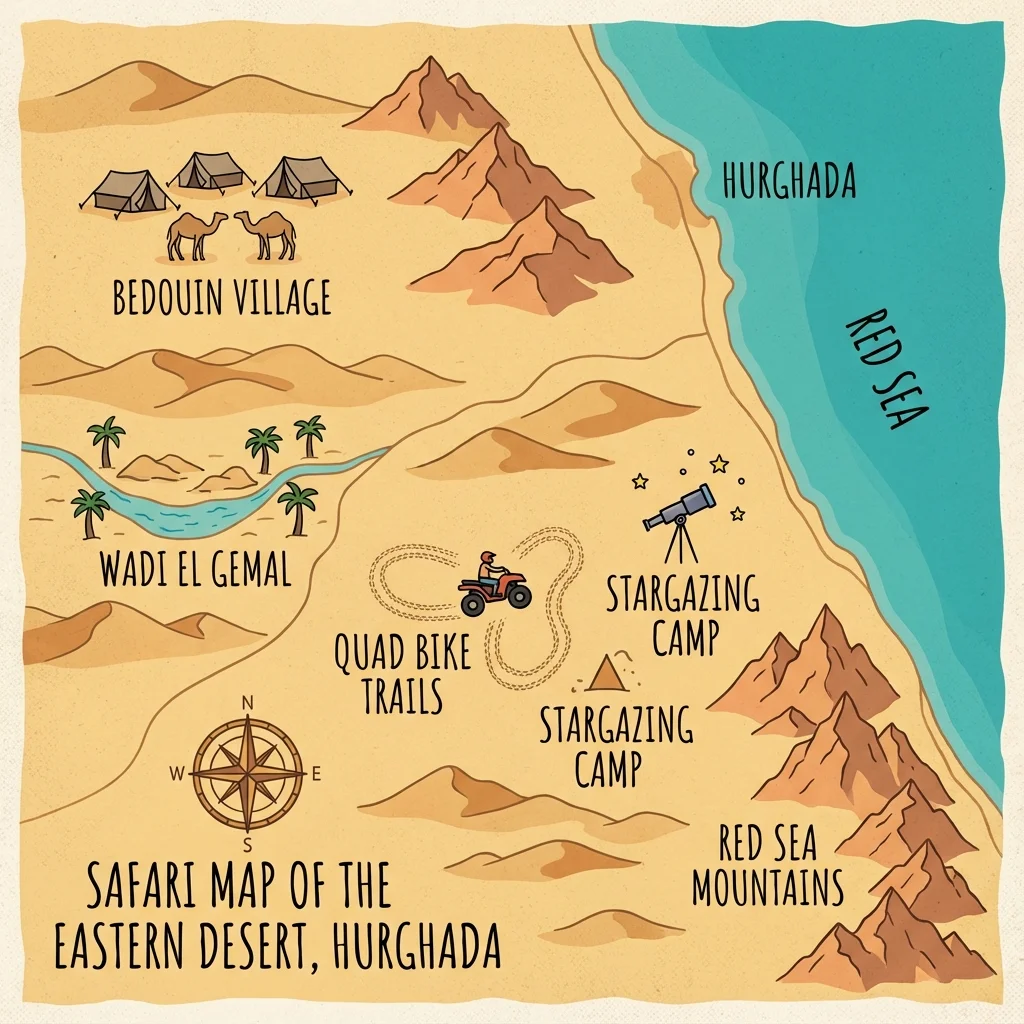
Distance: ~30km from Hurghada center.
Duration: Half-day (4-5 hours).
The classic experience. Quad biking, camel ride, tea with Bedouin family, sunset watching. Good for families with kids 10+.
Distance: ~150km south (towards Marsa Alam).
Duration: Full day or overnight.
Proper wilderness. Gazelle sightings, mangroves, ancient Roman mines. Requires 4x4. Not a "tourist trap" — real desert.
Distance: ~40km into the mountains.
Duration: Overnight.
Zero light pollution. The Milky Way is... honestly, it made me cry the first time. Dinner under the stars. Highly recommend October-March.
What you might see. And what might bite.
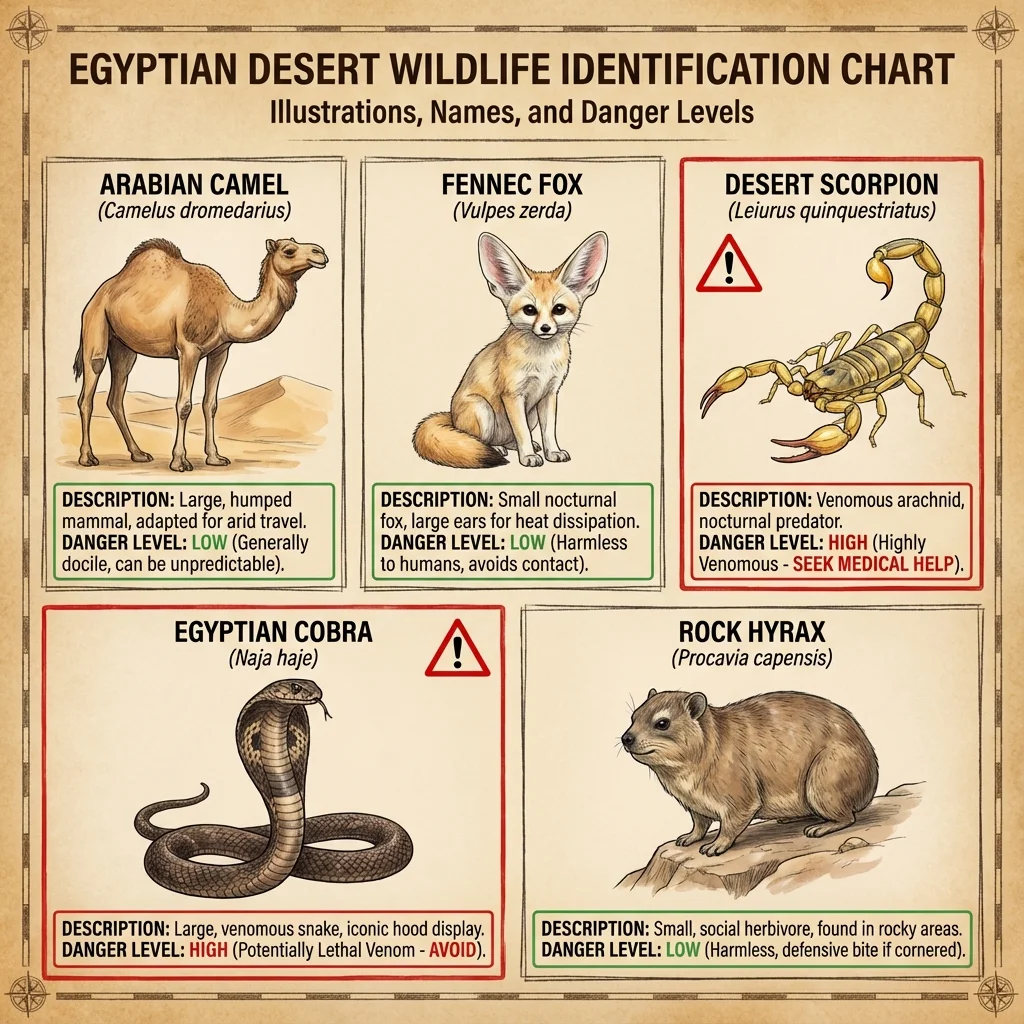
One hump. Used by Bedouins for transport and tourism. Surprisingly fast. Do not approach from behind — they kick.
Tiny with huge ears. Nocturnal. If you are on an overnight safari, you might see one near the camp at dawn. Do not feed.
Endangered. Occasionally spotted in Wadi el-Gemal. Incredibly shy. If you see one, consider yourself lucky.
Yellow, translucent. Found under rocks and in shoes you left outside.
Rule: Always shake out your boots and clothes in the morning.
Rarely encountered but exists. They avoid humans. If you see one — back away slowly. Do not provoke.
Large lizard (up to 1.5m). Not venomous but has a nasty bite. They eat scorpions — so actually useful.
Arabic: الغزال (El-Ghazal)
Small, elegant gazelle with lyre-shaped horns. Once common, now critically endangered due to overhunting. Found mainly in Wadi el-Gemal National Park. Can survive weeks without water.
Status: Strictly protected. Hunting = prison.
Arabic: الأرنب البري (El-Arnab El-Barri)
Desert hare with long ears. Nocturnal — you might see one frozen in headlights at night. Fast runners (up to 70 km/h). Bedouins traditionally hunted them, but numbers have dropped.
Status: Protected in national parks.
Arabic: الوعل النوبي (El-Wa'l El-Noubi)
Mountain goat with magnificent curved horns. Lives in the Red Sea Mountains. Incredibly sure-footed on cliffs. Population recovering slowly thanks to protection efforts.
Status: Endangered. Protected under Egyptian law.
Violations of Egyptian wildlife law (Law 102/1983) can result in:
The Bedouins understand this better than anyone — they've lived here for millennia by respecting the balance. Tourists who come to "hunt" damage that relationship. Don't be that person.
Some heal. Some kill. Some just really, really hurt. Know the difference.

Arabic: حليب الشوك (Haleeb El-Shok)
Purple-flowered thistle with white-veined leaves. Bedouins use seeds for liver health and digestion. The extract (Silymarin) is sold worldwide as a supplement.
Caution: The spines are sharp. Don't grab it bare-handed.
Arabic: الحلفا بر (Halfa Bar)
Tall aromatic grass. Dried and brewed as tea for kidney stones and urinary infections. Very common — Bedouins often offer it to guests. Tastes like lemongrass.
Tip: You can buy dried halfa in any Egyptian market.
Arabic: العشار (El-Ushar)
Shrub with large green leaves and balloon-like fruits. Latex is used (carefully) for skin conditions. Fruits are toxic if ingested — but the Bedouins know how to use the sap.
Warning: Do NOT eat the fruit or get the sap in your eyes.
Arabic: السكران (El-Sakran) — literally "The Intoxicant"
Pale yellow flowers, sticky hairy leaves. Contains tropane alkaloids (scopolamine, hyoscyamine). Causes hallucinations, delirium, and death in high doses.
Rule: If it smells foul and looks sticky — don't touch.
Found near wadis (dry riverbeds). All parts are extremely toxic — including smoke from burning the branches. Even honey from bees that visit the flowers can be toxic.
Rule: Never use oleander wood for cooking fires.
Arabic: السنط / الأكاسيا (El-Sant / Acacia)
The iconic desert tree with umbrella-shaped crown. Up to 10 cm thorns can puncture shoes and tyres. Camels eat the pods — humans don't. Great for shade, bad for bare skin.
Use: The wood is excellent for fires (burns slow and hot).
Arabic: العاقول / العقول (El-Aqool)
Low shrub with tiny hidden spines. Looks harmless. Isn't. The thorns are curved and hook into clothing and skin. Camels love it — hence the name.
Tip: Watch where you sit during rest breaks.
Arabic: الشبرق (El-Shobrook)
Dense spiny shrub with small yellow flowers. The whole plant becomes a ball of needles when dry. Common on roadsides and wadi edges.
Rule: Looks like a bush. Acts like a hedgehog.
الصمغ العربي
The Acacia tree produces a remarkable resin called Gum Arabic (Acacia Senegal gum). When the bark is cut or naturally cracks, golden amber crystals form. This gum has been traded for thousands of years — ancient Egyptians used it for mummification.
⚠️ Important: If collecting raw gum from trees, clean it thoroughly to remove bark debris and insects. For convenience and safety, buy packaged Gum Arabic powder from pharmacies, health food shops, or attarīn (traditional herbalists). It is sold as "صمغ عربي" or "Acacia fiber".
How to use: Dissolve 1 tablespoon in water overnight, drink in the morning. Tasteless. Or add to smoothies.
What the Bedouins taught me. Stuff they don't tell you on the quad bike tours.
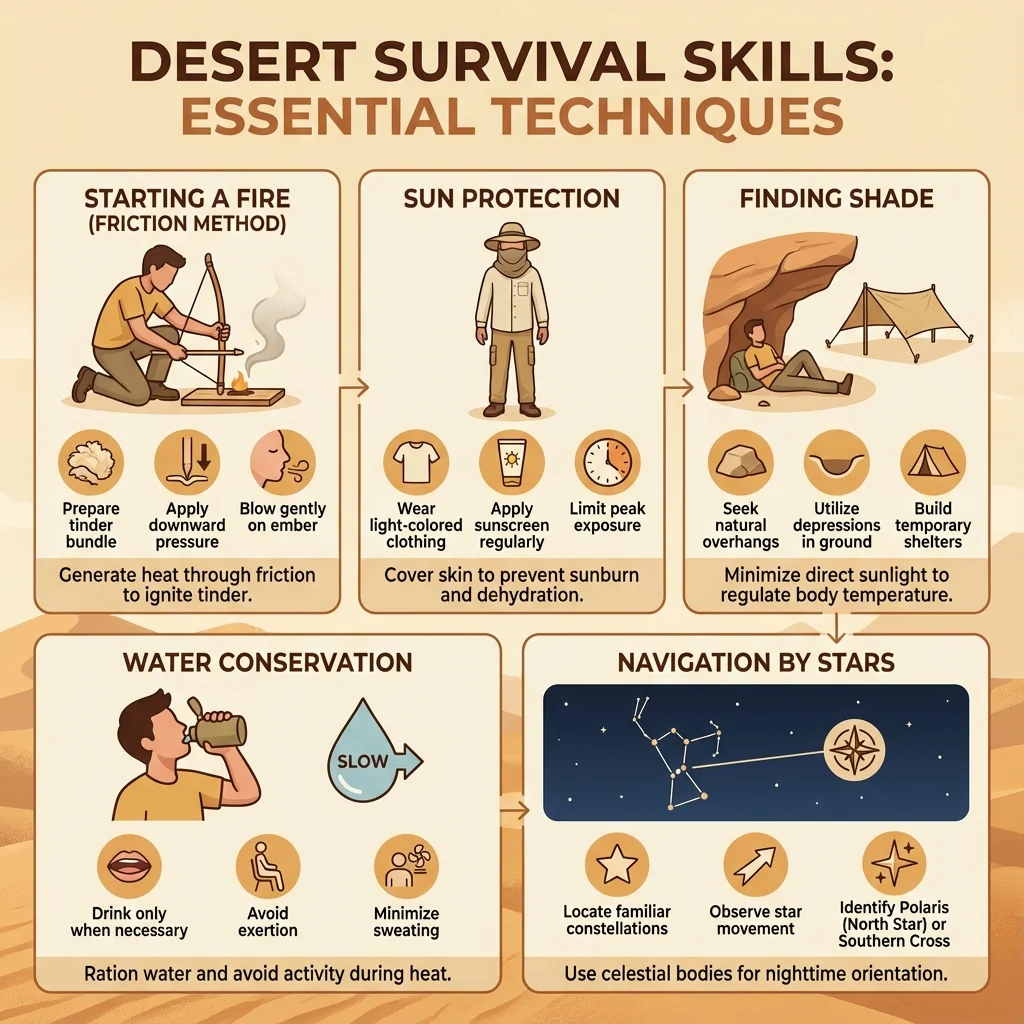
The classic friction method. You need:
The Bedouin method? They cheat — they carry a flint striker. Smart.
North Star (Polaris): Find the Big Dipper. The two stars at the end of the "cup" point to Polaris. That is north.
Orion's Belt: In winter, rises East, sets West. The sword always points South.
Not to scare you — but the desert is not a beach bar.
The desert in August is... punishing. Don't do that to yourself.
Daytime: 20-28°C.
Night: 10-15°C (bring a jacket!).
Perfect weather. Clear skies for stargazing. Wildlife more active. Peak season for reason.
Daytime: 28-35°C.
Night: 18-22°C.
Getting hot but manageable. Book early morning or late afternoon safaris. Avoid midday.
Daytime: 38-45°C+.
Night: 25-30°C.
Genuinely dangerous. Even the Bedouins retreat during these months. If you must go — sunrise only, and return before 9 AM.
Search for deals on flights to Hurghada from your city.
✈️ Search Flights to HurghadaAviasales compares prices across 38 booking sites.
Ready to explore more? Our complete site guide connects you to diving spots, hotel reviews, local cuisine, day trips, and everything else you need to plan your perfect Red Sea adventure.